


Detailed Proposals
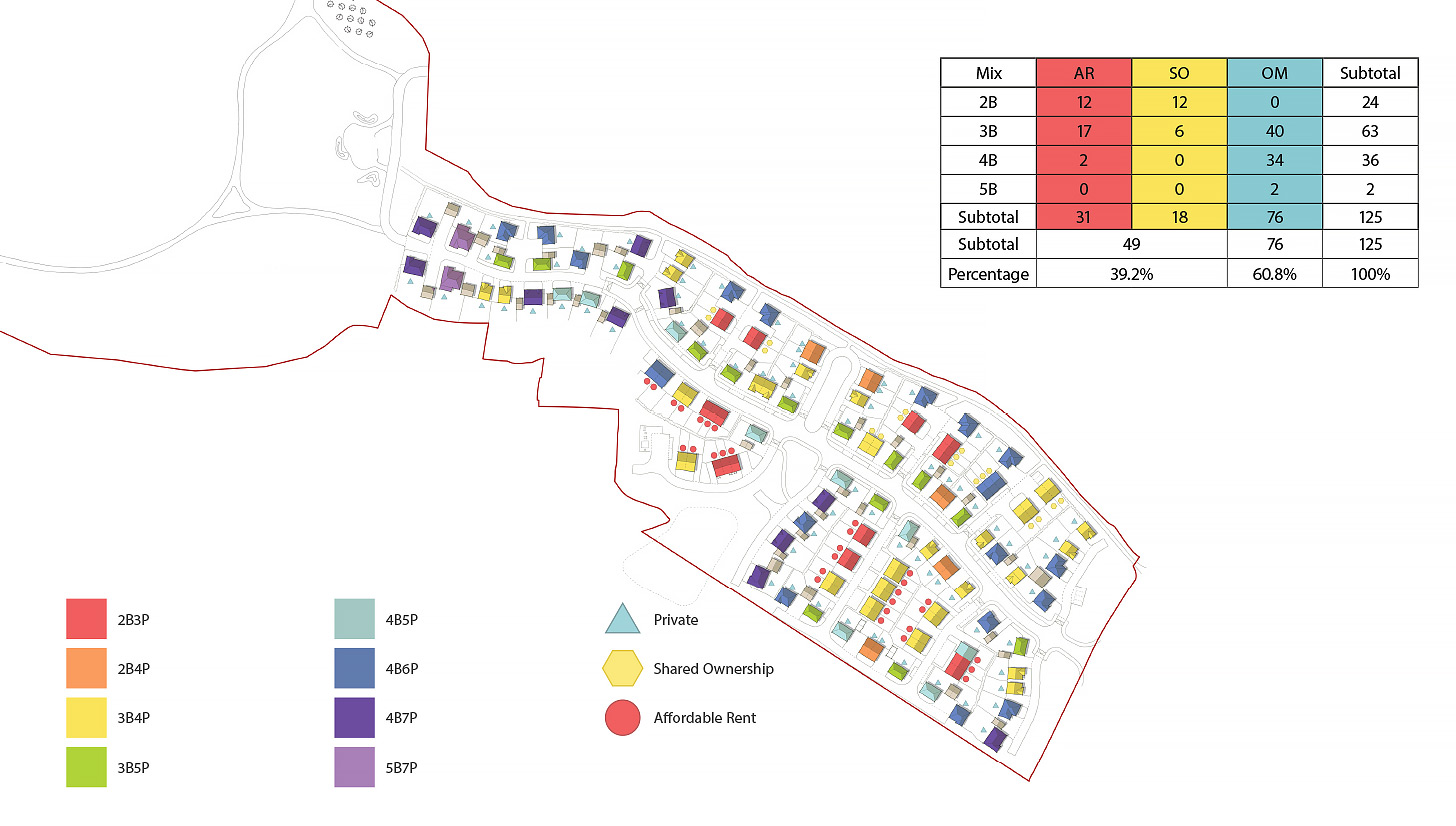
The development seeks to deliver approximately 125 new homes of varying sizes, types and tenures, including 40% affordable homes.
The affordable homes will be fully integrated with the rest of the development – this is called “tenure-blind” design – to ensure that they look the same and are fully integrated into an inclusive community.
Key features to include:
- Provision of approximately 125 new homes ranging from detached, semi detached and terrace houses.
- Provision of 40% affordable housing with a mix of social, affordable rent and shared ownership tenure.
- 5% custom build new homes.
- The use of sustainable construction methods through a fabric first approach and the provision of renewable energy through the use of air source heat pumps.
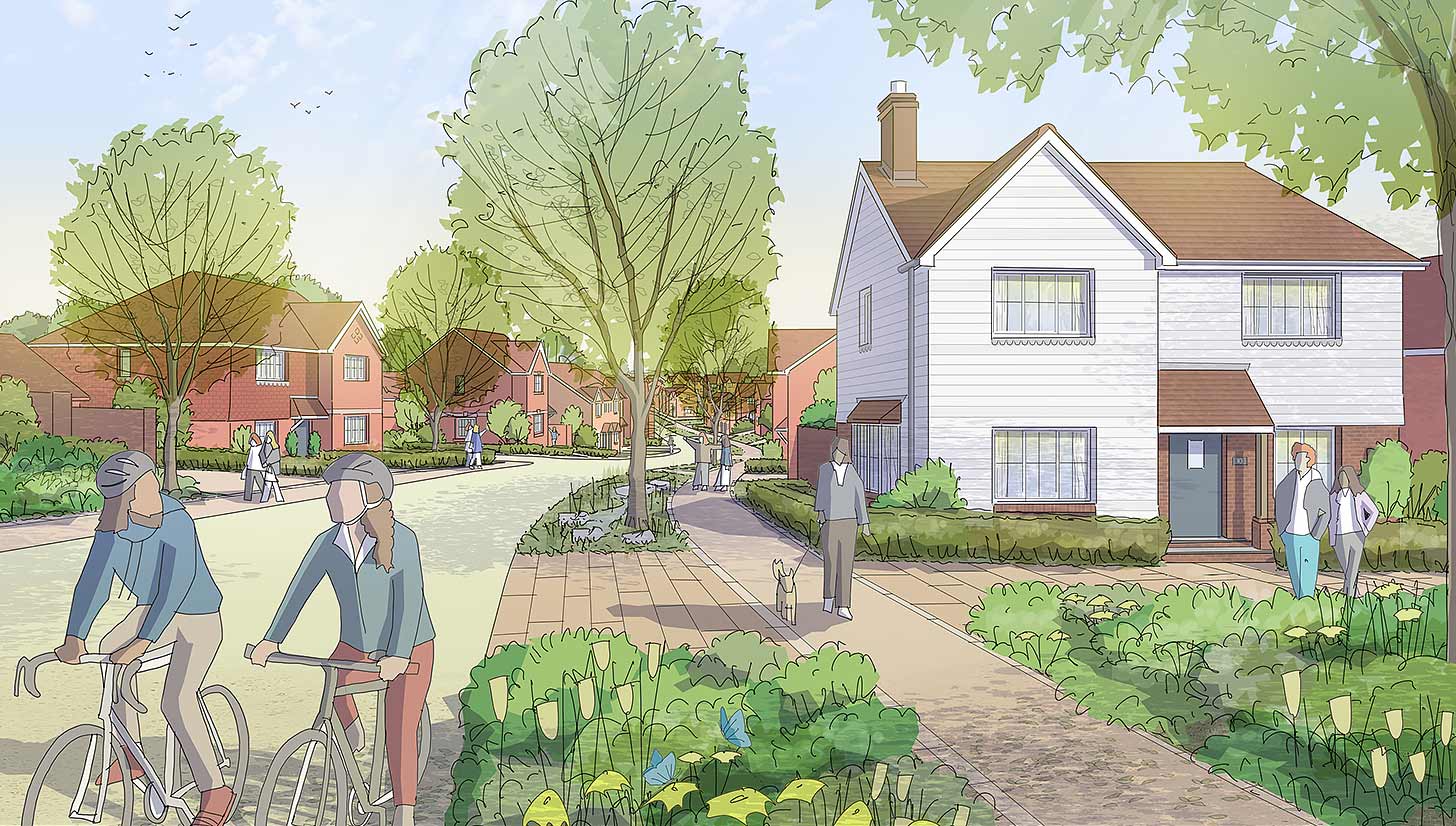
- Enhanced landscaping with tree-lined routes connecting different parts of the site and encouraging sustainable and active movement.
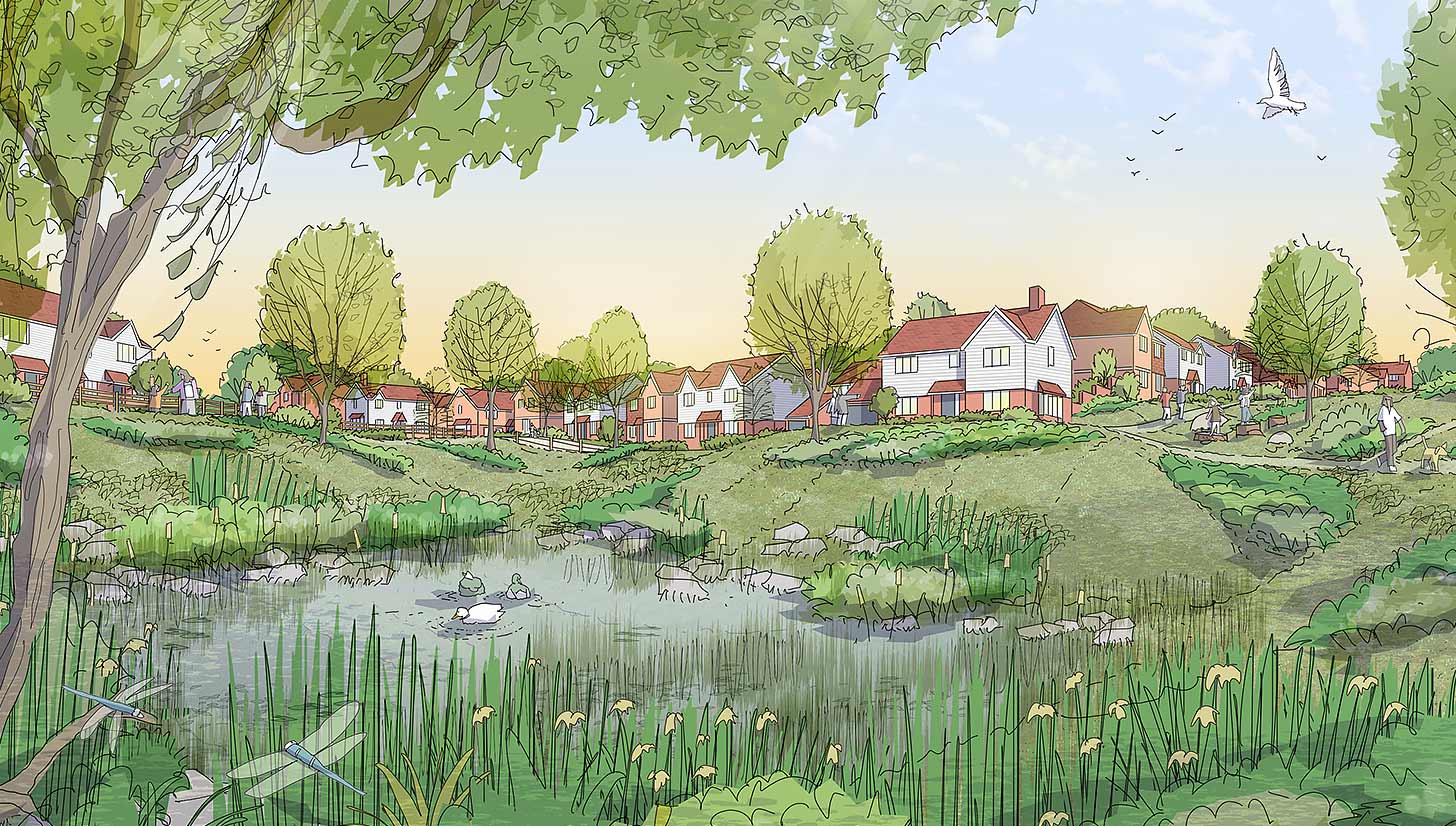
- Retention of mature trees across the site and increase in biodiversity net gain throughout.
- Sustainable drainage across the site with semi-wet soakage basins planted with wetland tolerant plants.
- A variety of children’s play spaces, including informal trim trails to designated play spaces.
- Careful consideration of highway access with Kent County Council highway review undertaken.
The proposed mix of the development is designed to cater for a range of people, including families, first time buyers and those needing more affordable rent or shared ownership options. There will also be an element of custom built housing on the site to provide an option for people on the custom build register.
All homes will be dual aspect to maximise natural light and ventilation. Parking will be provided as a minimum of two spaces per house, plus visitor parking spaces will be located throughout the layout. Secure cycle storage will also be included for every property.
The design of the homes have taken inspiration from the surrounding High Weald architecture and respond appropriately to the site context in terms of materials, roof form and colour palette.
Landscape consideration
Guided by the High Weald National Landscape’s Land Manager’s Pack, the planting approach aims to conserve and enhance the area’s distinctive historic and ecological character.
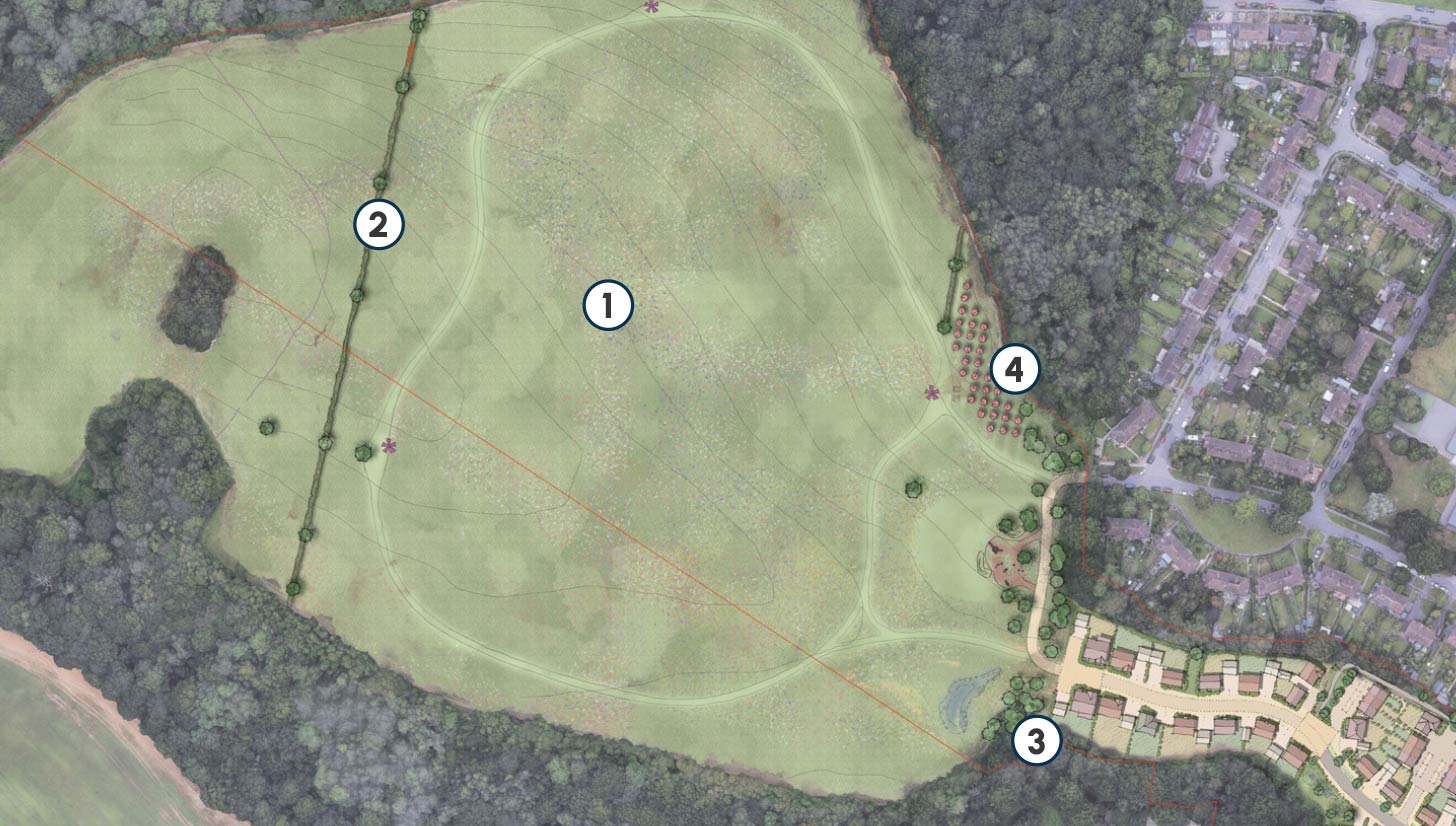
It focuses on restoring species-rich grassland, reinstating historic field boundaries, reconnecting fragmented ancient woodland, and introducing a community orchard. Grounded in traditional land management, the scheme promotes biodiversity, visual cohesion, and cultural continuity. Through the integration of habitat restoration and community involvement, it aligns with the planning principles set out in the High Weald AONB Management Plan 2024–2029.
Enhance Traditional High Weald Grassland
Introduce Weald Native Origin wildflower and grass seed to restore species-rich neutral grassland, enhancing biodiversity and reflecting local landscape character. The mix supports pollinators, native flora, and long-term ecological resilience.
Reinstate Historic Field Boundaries
Re-establish historic hedgerow alignments using native species to recreate traditional field patterns and support wildlife corridors.
Reconnect Ancient Woodland
Link fragmented woodland areas through native woodland edge and understory planting, enhancing ecological connectivity and supporting woodland species movement across the landscape.
Community Orchard
Introduce a community orchard using traditional fruit trees to provide foraging habitats and seasonal interest.
Click or tap numbers 1 to 4 to see more. Tap the same number again to close details.